
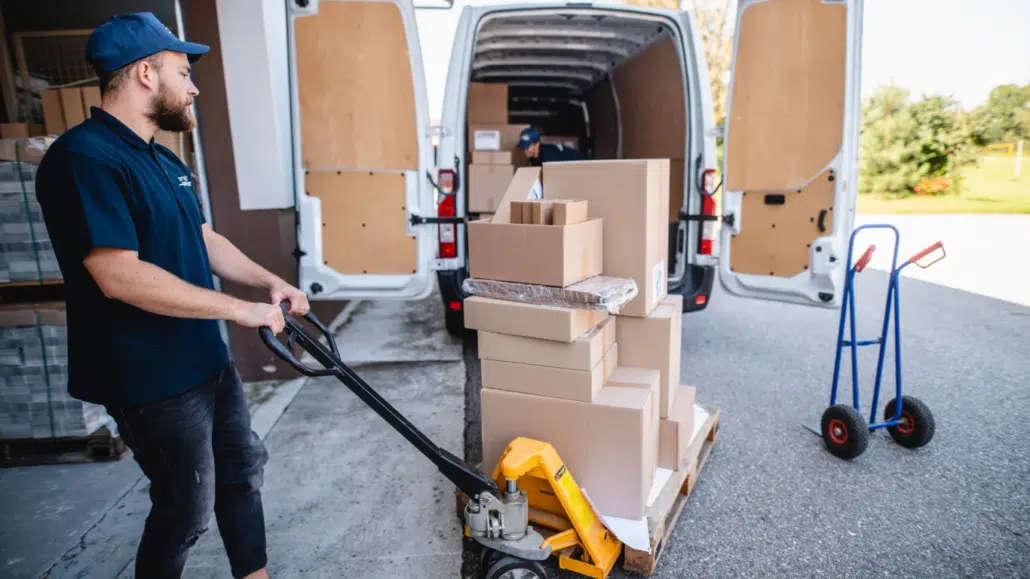

In the logistics and transportation industry, the term ‘pallet delivery‘ frequently crops up, yet many may wonder, “What is a pallet delivery?” Let’s delve into the intricacies of pallet delivery, explaining its benefits and types and why it is an essential component of modern logistics.
Understanding Pallet Delivery
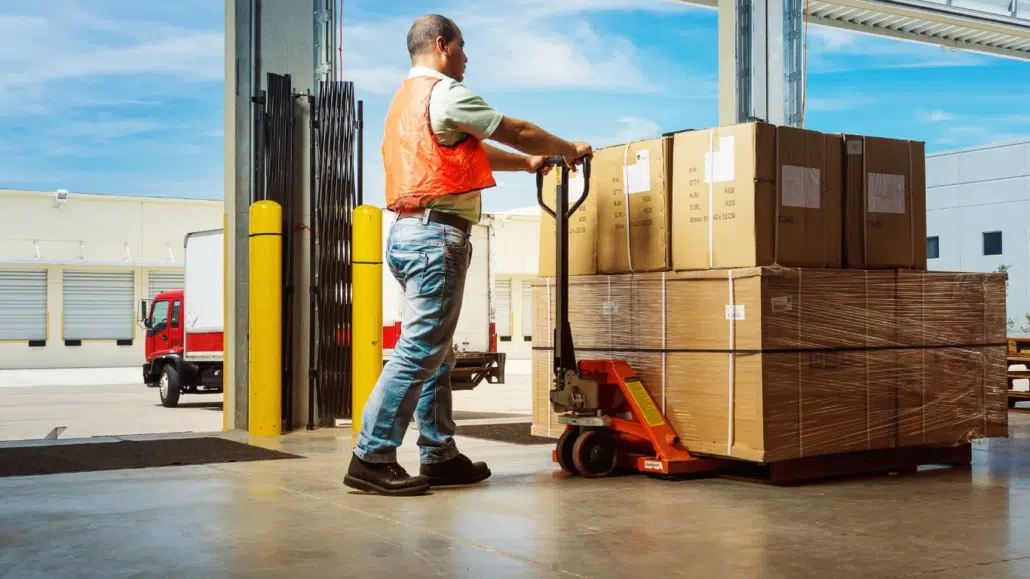
A pallet delivery involves transporting goods stacked on pallets, which are flat transport structures that support goods in a stable manner. Typically made of wood, plastic, or metal, pallets ensure that goods are kept together, making them easier and safer to handle with forklifts and pallet jacks.
The primary purpose of using pallets is to facilitate efficient loading, unloading, and transportation of goods. They standardise the shipping process, allowing for better space utilisation and protection of items during transit.
Benefits of Pallet Delivery
Efficiency: Palletising goods means they can be moved more quickly and easily compared to individual boxes. This efficiency reduces handling time and labour costs.
Protection: Goods on pallets are less likely to be damaged. The stability offered by pallets minimises the risk of items shifting or falling during transit.
Optimised Space: Pallets help in maximising space in trucks, warehouses, and storage facilities. By stacking items vertically, more goods can be transported in a single trip, reducing the number of journeys needed.
Standardisation: Pallets come in standard sizes, facilitating easier planning and logistical operations. This standardisation helps in maintaining uniformity across different stages of the supply chain.

Types of Pallet Delivery
Pallet deliveries can vary depending on the nature of the goods, the destination, and the mode of transport. Here are some common types:
Standard Pallet Delivery: Ideal for general goods that fit within the standard pallet dimensions (usually 120cm x 100cm). This type is widely used in industries ranging from retail to manufacturing.
Euro Pallet Delivery: Euro pallets (120cm x 80cm) are commonly used in Europe and are designed to fit seamlessly in European transport systems. This type is beneficial for businesses involved in international trade within Europe.
Half Pallet Delivery: Smaller and more cost-effective, half pallets are used for smaller consignments. They are ideal for goods that do not require a full pallet’s space.
Oversized Pallet Delivery: For goods that exceed the dimensions of a standard pallet, oversized pallet delivery ensures that these items are transported securely. This type is commonly used for machinery, large equipment, or bulkier items.
The Process of Pallet Delivery
The process of pallet delivery typically involves the following steps:
Preparation: Goods are carefully packed and secured onto the pallet using shrink wrap, straps, or other securing methods. Proper labelling and documentation are essential at this stage.
Collection: The logistics provider collects the pallet from the sender’s location using appropriate handling equipment.
Transportation: The pallet is transported to the destination via road, rail, air, or sea. During transit, logistics companies use tracking systems to monitor the shipment’s progress.
Delivery: Upon arrival, the pallet is unloaded and delivered to the recipient. Depending on the service agreement, the delivery could be to a specific location within the recipient’s premises.
Choosing the Right Pallet Delivery Service
Selecting the right pallet delivery service depends on several factors:
Nature of Goods: Consider the type and volume of goods. Perishable items might require specialised handling or refrigerated transport.
Destination: For international deliveries, choose a provider experienced in global logistics, ensuring compliance with customs regulations.
Service Level: Different providers offer various service levels, from standard to express delivery. Evaluate your needs to select the most appropriate service.
Reputation and Reliability: Opt for a provider with a strong reputation for reliability and excellent customer service. Reviews and testimonials can offer insights into their performance.
Why Pallet Delivery is Essential for Businesses
For businesses, especially those dealing with large volumes of goods, pallet delivery is indispensable. It offers a cost-effective, efficient, and reliable method of transporting products, which is crucial in maintaining supply chain fluidity. Whether you are a small business or a large enterprise, incorporating pallet delivery into your logistics strategy can lead to significant operational improvements and cost savings.

Conclusion
In conclusion, understanding “What is a pallet delivery” is crucial for anyone involved in logistics and transportation. It offers numerous benefits, including improved efficiency, protection of goods, and optimised space utilisation. By choosing the right type of pallet delivery and a reliable service provider, businesses can streamline their logistics operations, ensuring timely and secure deliveries. At T&B Solutions, we pride ourselves on providing top-notch pallet delivery services tailored to meet your specific needs. Contact us today to learn more about how we can support your business with our comprehensive logistics solutions.
Who Are We?
T&B Solutions provide consultancy and training services to companies of all sizes in and around the North East and North West of England. Our goal is to help you and your team stay safe and give you the ability to expand with ease.
Contact T&B Solutions
T and B Solutions,
Limerick Road
Dormanstown Industrial Est
Redcar
Cleveland TS10 5JU
01642 134447
enquiries@tandbsolutions.co.uk
Opening Hours
Mo-Fri : 9:00-5:00pm
Sat: 9:00-5:00p,
Sun: Closed

Leave a Reply
Want to join the discussion?Feel free to contribute!