


The Importance of Pallet Tracking for Streamlining Business Operations

Craig Wells | Owner & Director
In today’s fast-paced logistics and distribution world, effective pallet tracking has become essential for businesses of all sizes. Whether you’re a manufacturer in the UK, supplier, or distributor, the ability to monitor your pallet’s movements from start to delivery can significantly impact your business. Here’s how our clients can leverage our pallet tracking service to boost their business operations.
So, why is pallet tracking essential for Modern Businesses?
1. Enhanced Inventory Management
Tracking inventory is challenging for most businesses, managing hundreds or thousands of stock and delivery. Our Pallet tracking system allows for real-time updates crucial to maintaining optimal stock levels. With our tracking technology, our clients can pinpoint the exact location of their pallets, reducing the risk of misplacement or loss (we all know how this can feel).
This leads to more accurate stock management, which helps avoid overstocking or stockouts that could disrupt supply chains.
2. Improved Cost Efficiency
Lost or misplaced pallets cost companies time and money. The expense of replacing lost items and delays in re-supplying products can heavily impact profit margins. Our pallet tracking minimises these risks by ensuring businesses always know where their assets are. Furthermore, tracking helps streamline route planning so our clients can optimise deliveries and save fuel costs, labour, and time.
3. Enhanced Customer Satisfaction
In an era of Amazon, Next day delivery and so on, where customers expect quick, transparent deliveries, our pallet tracking system offers valuable insights into each stage of the shipping process. By knowing the exact location of pallets in transit, businesses can give customers real-time updates and more accurate delivery times, building trust and satisfaction. This ability to deliver on promises can set businesses apart from their competitors and foster lasting client relationships. Sometimes just giving a client an update can mean the whole world.

How does it actually work?
RFID and GPS Tracking
Please stick with me here: Radio Frequency Identification (RFID) and Global Positioning System (GPS) are two leading technologies in pallet tracking. RFID tags, which attach directly to pallets, transmit data that can be read via scanners, giving real-time information about pallet locations. Meanwhile, GPS tracking offers an additional layer of insight, particularly for long-distance shipments, as it accurately tracks pallets in transit.
These technologies provide visibility that’s critical to managing complex supply chains. By integrating with centralised systems, businesses can access real-time updates from their devices, ensuring that decision-makers and logistics teams are informed.
Integration with Supply Chain Systems
Tracking data should integrate with existing supply chain management software for maximum effectiveness. Pallet tracking enables end-to-end visibility across the supply chain when linked with broader systems. Businesses can monitor their entire network from a single platform, simplifying decision-making and enabling more accurate demand forecasting.
Integrating tracking technology with supply chain systems also allows companies to automate critical functions, like inventory updates, making workflows more efficient and reducing the risk of human error. It’s also a great way to see how your business is doing month to month.


What are the benefits?
Enhanced Security
Pallet tracking goes beyond simply monitoring location; it also adds a layer of security to shipments. Tracking technology reduces the theft risk by allowing companies to locate missing assets immediately. Businesses dealing with high-value or sensitive items can rest assured that each pallet is secure throughout its journey. In the event of a lost or stolen pallet, tracking data can also provide valuable information to authorities, increasing the chance of recovery. I don’t need to explain the importance of this when it comes to claiming on your insurance, either.
Sustainability
Logistics being streamlined can lead to more sustainable operations. By identifying inefficiencies through tracking data, businesses can reduce unnecessary trips and improve fuel use. This reduction in transport emissions is significant for companies aiming to meet corporate social responsibility goals or sustainability standards. Pallet tracking can also help businesses avoid overusing resources by reducing the need for replacement pallets, aligning logistics strategies with eco-conscious values.
Improved Data Collection and Decision-Making
Tracking technology provides businesses with a wealth of data. This information can highlight trends, identify bottlenecks, and suggest improvements from shipping routes to handling times. For example, companies can use data from their tracking systems to optimise delivery routes, analyse carrier performance, or even predict delays. With data-backed insights, businesses can make informed decisions that streamline logistics and ultimately improve their bottom line.
Increased Productivity and Workforce Efficiency
Pallet tracking technology benefits inventory management and streamlines warehouse operations, freeing employees for other tasks. With real-time tracking data, warehouse teams spend less time searching for misplaced pallets or manually updating inventory records. This boosts overall productivity, as workers can focus on higher-value tasks rather than troubleshooting logistical issues. Additionally, having streamlined processes can reduce employee stress and improve workflow, creating a more organised and efficient workplace. Save time, save money.

At T&B Solutions, we understand the critical role that pallet tracking plays in modern supply chains. Our pallet-tracking solutions are designed to give businesses the end-to-end visibility they need to stay competitive.
Our solutions leverage the latest RFID and GPS tracking technologies, giving clients the tools to monitor pallet locations in real time and prevent common logistical challenges like delays and lost goods.
Case Study: Pallet Tracking Success Story
One of our clients, a significant food supplier, struggled with inefficiencies and frequent product loss during distribution. By implementing T&B Solutions’ pallet tracking system, they could track each pallet’s journey, reduce the loss rate by 30%, and optimise their routes, saving an estimated 15% on fuel costs annually. Through a collaborative approach, we provided a tailored solution that met their specific needs, resulted in significant cost savings, and improved client satisfaction.
What are the benefits?
As technology advances, the future of pallet tracking looks set to evolve even further. Innovations like Artificial Intelligence (AI) and the Internet of Things (IoT) are already beginning to influence logistics, allowing for predictive analytics and highly automated processes. AI can predict potential delays or risks in shipping routes, while IoT enables more detailed tracking at every stage of the pallet’s journey. For businesses aiming to stay competitive, embracing these technologies will be essential.
Pallet tracking offers a wealth of benefits—from enhanced security to sustainable practices—and companies that adopt these solutions will be better equipped to meet the demands of modern business. T&B Solutions is committed to helping businesses streamline operations and improve customer satisfaction through effective pallet tracking.
Share
Share
Share
In the logistics and transportation industry, the term ‘pallet delivery‘ frequently crops up, yet many may wonder, “What is a pallet delivery?” Let’s delve into the intricacies of pallet delivery, explaining its benefits and types and why it is an essential component of modern logistics.
Understanding Pallet Delivery
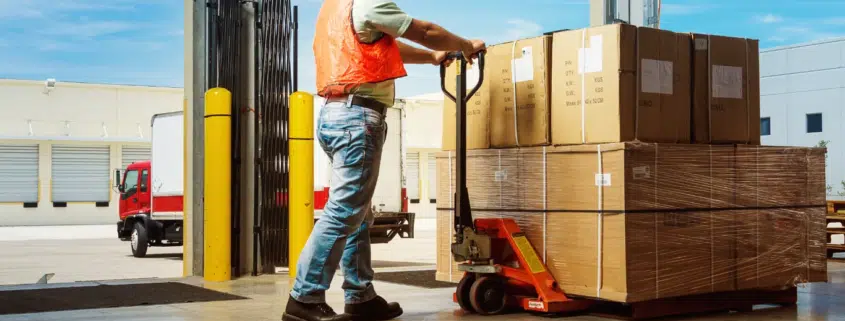
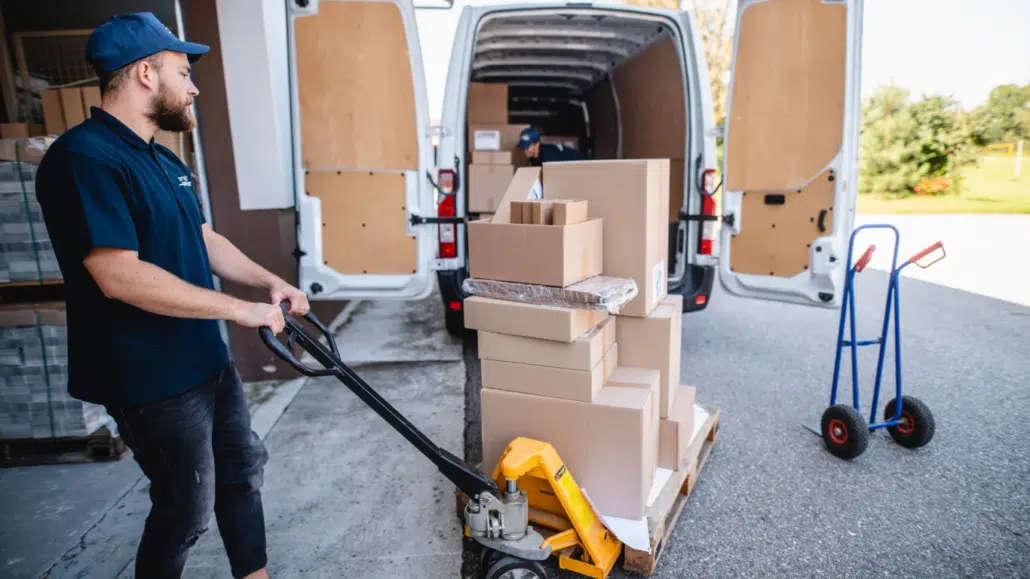
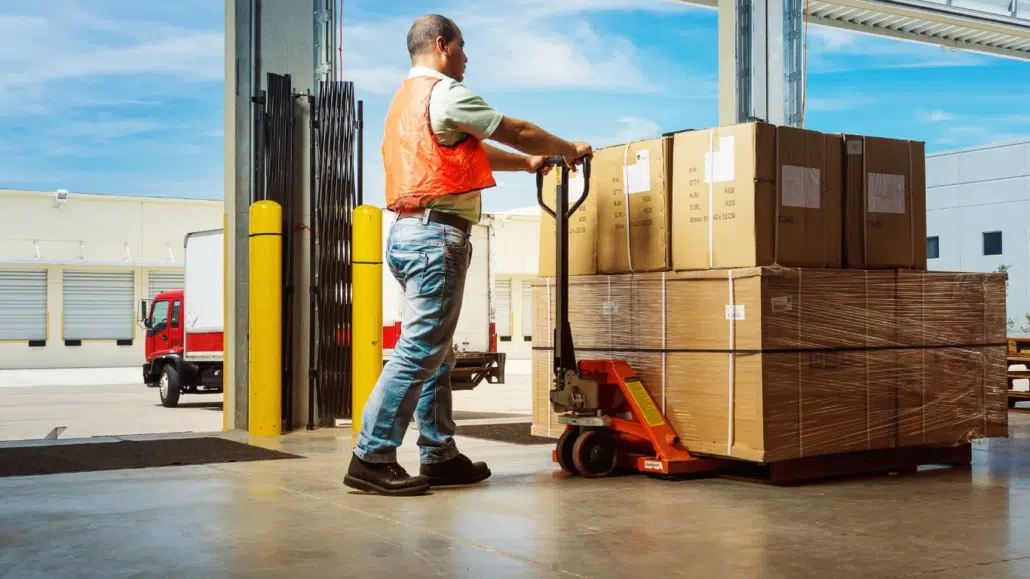
A pallet delivery involves transporting goods stacked on pallets, which are flat transport structures that support goods in a stable manner. Typically made of wood, plastic, or metal, pallets ensure that goods are kept together, making them easier and safer to handle with forklifts and pallet jacks.
The primary purpose of using pallets is to facilitate efficient loading, unloading, and transportation of goods. They standardise the shipping process, allowing for better space utilisation and protection of items during transit.
Benefits of Pallet Delivery
Efficiency: Palletising goods means they can be moved more quickly and easily compared to individual boxes. This efficiency reduces handling time and labour costs.
Protection: Goods on pallets are less likely to be damaged. The stability offered by pallets minimises the risk of items shifting or falling during transit.
Optimised Space: Pallets help in maximising space in trucks, warehouses, and storage facilities. By stacking items vertically, more goods can be transported in a single trip, reducing the number of journeys needed.
Standardisation: Pallets come in standard sizes, facilitating easier planning and logistical operations. This standardisation helps in maintaining uniformity across different stages of the supply chain.
Types of Pallet Delivery
Pallet deliveries can vary depending on the nature of the goods, the destination, and the mode of transport. Here are some common types:
Standard Pallet Delivery: Ideal for general goods that fit within the standard pallet dimensions (usually 120cm x 100cm). This type is widely used in industries ranging from retail to manufacturing.
Euro Pallet Delivery: Euro pallets (120cm x 80cm) are commonly used in Europe and are designed to fit seamlessly in European transport systems. This type is beneficial for businesses involved in international trade within Europe.
Half Pallet Delivery: Smaller and more cost-effective, half pallets are used for smaller consignments. They are ideal for goods that do not require a full pallet’s space.
Oversized Pallet Delivery: For goods that exceed the dimensions of a standard pallet, oversized pallet delivery ensures that these items are transported securely. This type is commonly used for machinery, large equipment, or bulkier items.
The Process of Pallet Delivery
The process of pallet delivery typically involves the following steps:
Preparation: Goods are carefully packed and secured onto the pallet using shrink wrap, straps, or other securing methods. Proper labelling and documentation are essential at this stage.
Collection: The logistics provider collects the pallet from the sender’s location using appropriate handling equipment.
Transportation: The pallet is transported to the destination via road, rail, air, or sea. During transit, logistics companies use tracking systems to monitor the shipment’s progress.
Delivery: Upon arrival, the pallet is unloaded and delivered to the recipient. Depending on the service agreement, the delivery could be to a specific location within the recipient’s premises.
Choosing the Right Pallet Delivery Service
Selecting the right pallet delivery service depends on several factors:
Nature of Goods: Consider the type and volume of goods. Perishable items might require specialised handling or refrigerated transport.
Destination: For international deliveries, choose a provider experienced in global logistics, ensuring compliance with customs regulations.
Service Level: Different providers offer various service levels, from standard to express delivery. Evaluate your needs to select the most appropriate service.
Reputation and Reliability: Opt for a provider with a strong reputation for reliability and excellent customer service. Reviews and testimonials can offer insights into their performance.
Why Pallet Delivery is Essential for Businesses
For businesses, especially those dealing with large volumes of goods, pallet delivery is indispensable. It offers a cost-effective, efficient, and reliable method of transporting products, which is crucial in maintaining supply chain fluidity. Whether you are a small business or a large enterprise, incorporating pallet delivery into your logistics strategy can lead to significant operational improvements and cost savings.

Conclusion
In conclusion, understanding “What is a pallet delivery” is crucial for anyone involved in logistics and transportation. It offers numerous benefits, including improved efficiency, protection of goods, and optimised space utilisation. By choosing the right type of pallet delivery and a reliable service provider, businesses can streamline their logistics operations, ensuring timely and secure deliveries. At T&B Solutions, we pride ourselves on providing top-notch pallet delivery services tailored to meet your specific needs. Contact us today to learn more about how we can support your business with our comprehensive logistics solutions.
Share
Share
Share
Who Are We?
T&B Solutions provide consultancy and training services to companies of all sizes in and around the North East and North West of England. Our goal is to help you and your team stay safe and give you the ability to expand with ease.
Contact T&B Solutions
T and B Solutions,
Limerick Road
Dormanstown Industrial Est
Redcar
Cleveland TS10 5JU
01642 134447
enquiries@tandbsolutions.co.uk
Opening Hours
Mo-Fri : 9:00-5:00pm
Sat: 9:00-5:00p,
Sun: Closed